Illustrated in Vintage Jazz Age sheet music cover illustration style
The Axeman's Jazz Night
A Most Peculiar Concert Announcement from 1919
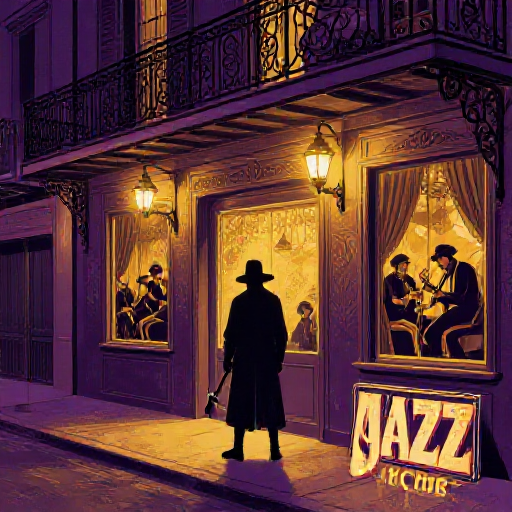
New Orleans in 1919 was a city of music and heat and mystery. The jazz poured out of every window. The streets smelled of beignets and river water and things best not examined too closely. And somewhere in the city, someone with an axe was making nighttime visits to Italian grocery stores. The Axeman had arrived, and he had opinions about music.
The Axeman of New Orleans attacked at least eight people, most of them Italian-American grocery store owners, between May 1918 and October 1919.
The Axeman wrote a letter to the newspaper. It said he was a demon from the hottest hell, and that he found jazz music very agreeable. Therefore, on the night of March 19, 1919, he would pass over every house where a jazz band was playing and visit only the houses where it was quiet. New Orleans played jazz that night. Every single house. Every window. Every parlor. Even people who hated jazz played jazz.
The letter was published in The Times-Picayune on March 13, 1919. No attacks occurred on the announced evening. Dance halls were packed all night.
The Axeman had a method. He would remove a panel from the back door, reach inside, and let himself in. He always used the victim's own axe. He left the axe behind. He never seemed to take anything. Nobody could figure out why. 'Demon from hell' remained the best theory the police had, which tells you something about the police.
The Axeman's modus operandi was consistent: entering through a chiseled door panel, using the household's own hatchet, and leaving no apparent motive.
The attacks stopped as suddenly as they started. October 1919, and then nothing. No more letters. No more axe. New Orleans went back to its usual mysterious business. Some people suspected a Mafia connection. Some suspected a supernatural one. The city, being New Orleans, was comfortable with both possibilities existing at once.
The killings ceased in October 1919 with no explanation. Theories range from Mafia involvement to a single deranged individual. The case was never solved.
Nobody was ever caught. Nobody was ever charged. The Axeman of New Orleans became part of the city's long tradition of glamorous, unexplained strangeness. A jazz song was written about him. The French Quarter absorbed the story like it absorbs everything: warmly, wickedly, without apology. The back doors of New Orleans stayed a little more locked after that. Only a little.
The Axeman remains unidentified. His legend has inspired songs, novels, and television. The case is considered one of America's most atmospheric unsolved mysteries.