Illustrated in Cold, precise architectural blueprint style style
The Man with No Pattern
A Story About Someone Who Really Did His Research
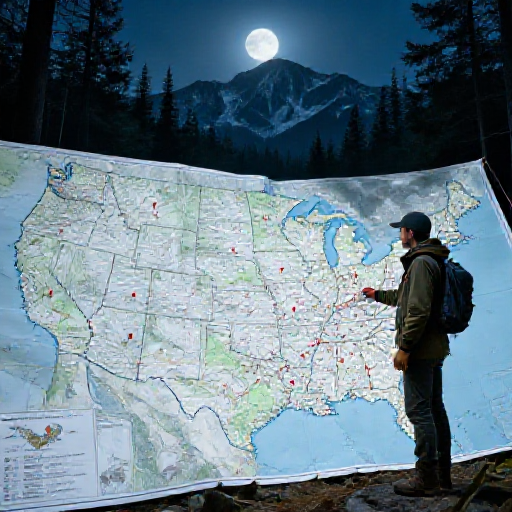
Israel was not like other serial killers. He was organized. He was patient. He planned. While others acted on impulse, Israel flew thousands of miles to commit crimes in places where he had never been before. He buried supply kits in people's yards years before he needed them. He was, in the most horrible way possible, a professional.
Keyes is believed to have killed across the United States over more than a decade. He pre-positioned 'murder kits' in remote locations years in advance.
Israel lived in Alaska and ran a construction company. He was pleasant, hard-working, and gave no one reason to notice him. He traveled alone on 'fishing trips.' He paid with cash. He turned off his phone. He never hunted near his home. He knew every rule the investigators used to catch killers, and he broke every single one of them on purpose.
Keyes was meticulous about avoiding detection, using cash, disabling his phone, and traveling far from home to commit crimes.
In 2012, Israel needed money. He kidnapped a young woman named Samantha Koenig from her coffee kiosk in Anchorage. This was not his careful plan. He was improvising. Improvising led to using her debit card. Using her debit card led to a trail. Trails lead to one place. Even professionals make mistakes when they stop following the rules.
Keyes kidnapped Samantha Koenig in February 2012. Using her debit card at an ATM outside his home state provided the lead that identified him.
When the FBI caught Israel, they were very eager to learn what he knew. He was willing to talk, a little. He gave them clues like a game. He drew circles on maps showing where he had been. He wouldn't give them the victims' names. He had his own rules about that, too. Some professionals maintain their code even at the very end.
Keyes negotiated with the FBI, providing limited information about his crimes before his death. He is believed responsible for at least 11 murders.
In December 2012, Israel Keyes died in his cell. He left a long poem in red crayon on his cell wall. Investigators still haven't found all the victims he hinted at. Somewhere across America, in fields and forests, those buried kits are waiting. Israel was very good at one thing: making sure the story never quite finished.
Keyes died by suicide in December 2012. He left an 18-stanza poem. The full extent of his crimes remains unknown.